
The Power of Worker-Owned Cooperatives
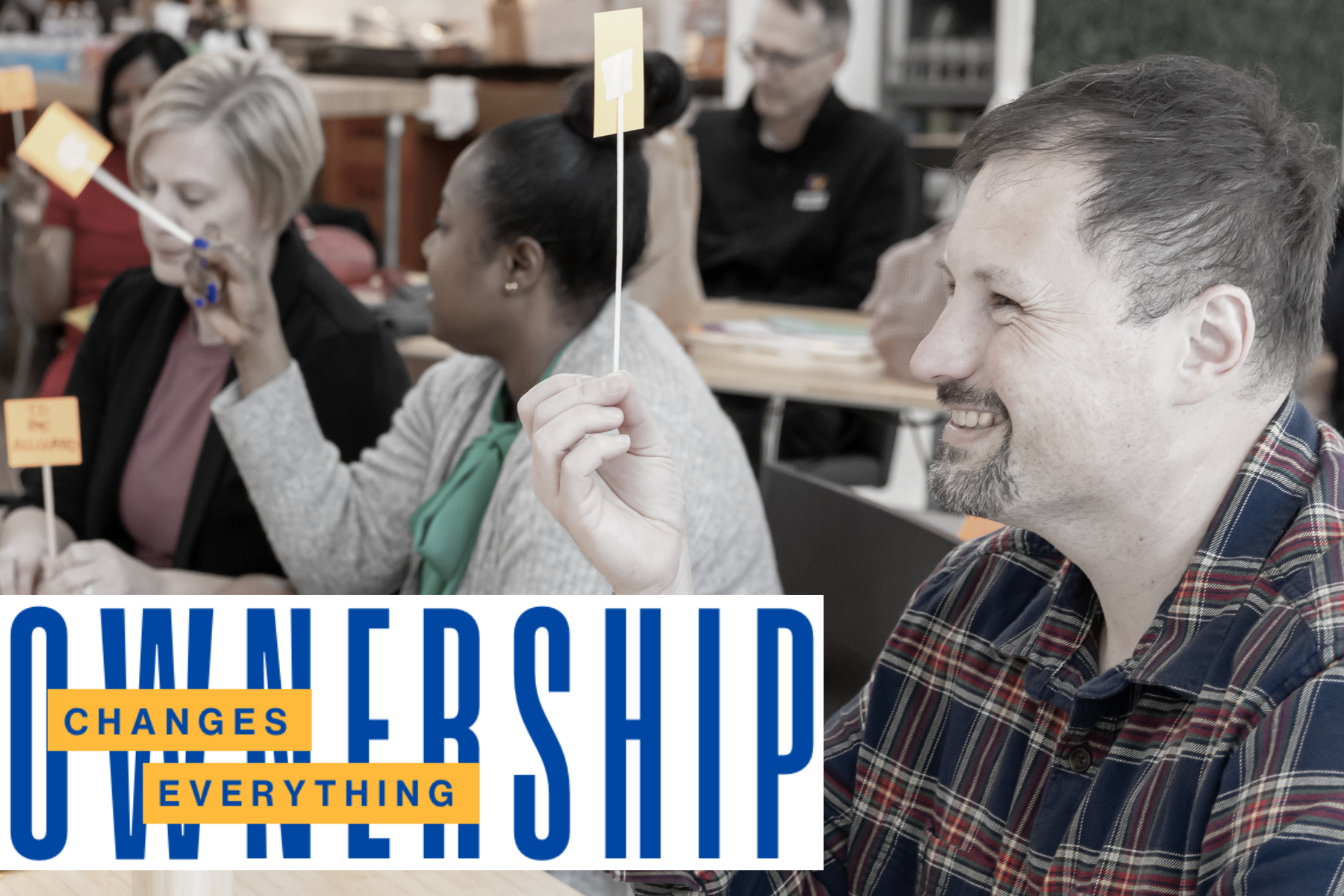
What does it really mean to be empowered?
For many, empowerment is framed as having a voice, a seat at the table, or the ability to influence decisions. While those are important, true empowerment goes deeper. It is about ownership—not just of ideas, but of outcomes. It is about sharing in both the responsibility and the rewards of the work we do every day. This is where worker-owner cooperatives offer a powerful and often overlooked model for the future of work.
Empowerment in Decision-Making
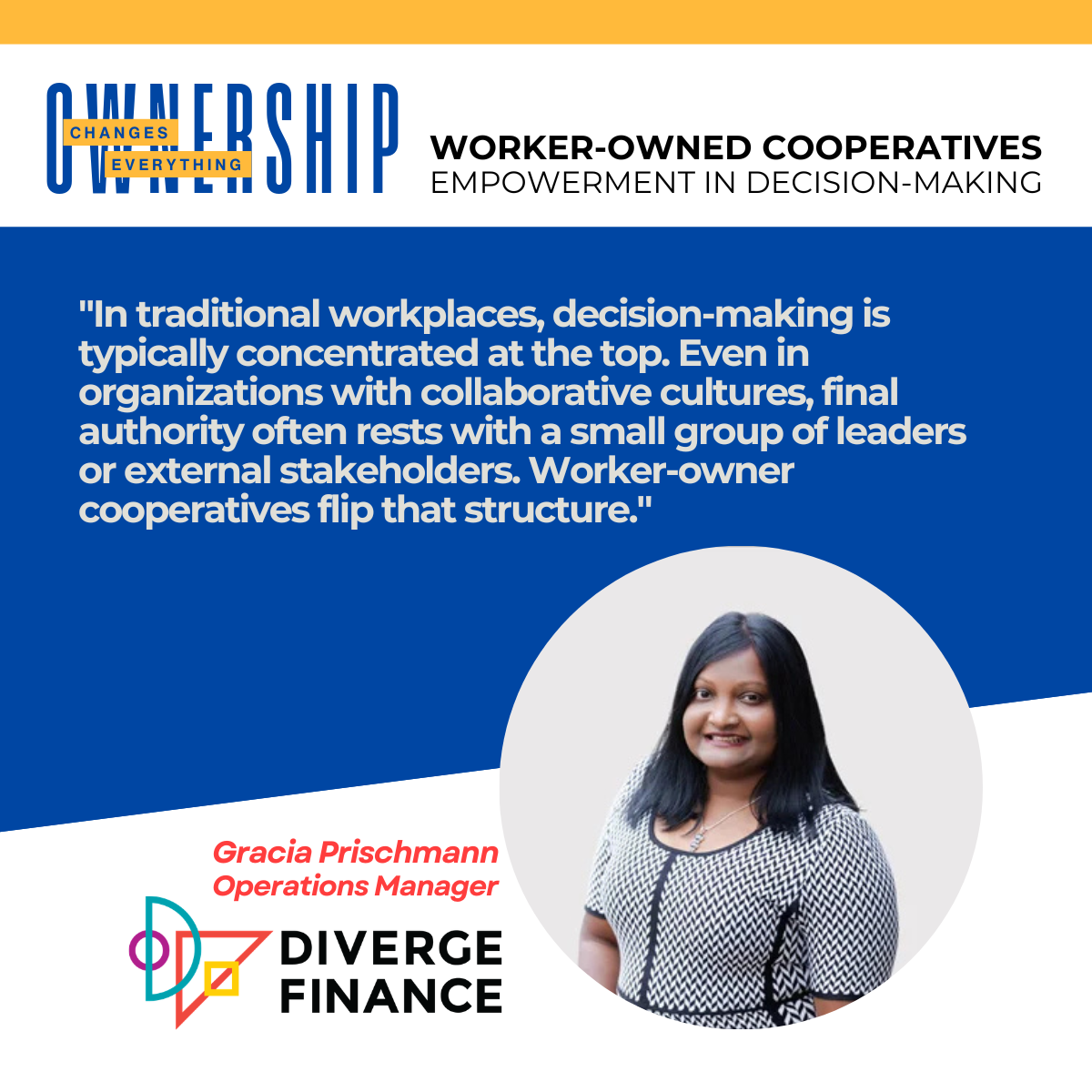
In traditional workplaces, decision-making is typically concentrated at the top. Even in organizations with collaborative cultures, final authority often rests with a small group of leaders or external stakeholders. Worker-owner cooperatives flip that structure.
Worker cooperatives take a different approach—but not a single, uniform one. As a worker-owner, you are not just an employee—you are a steward of the organization. Your voice carries weight not because it is invited, but because it is inherent to the structure. Decisions are made more democratically, with transparency and accountability built into the process.
Every co-op must define its own decision-making framework, and that can range across a spectrum. Some cooperatives operate with more concentrated authority, where a CEO or management team is empowered to make day-to-day and strategic decisions. Others lean toward more diffused models, where decisions are made through member votes or, in some cases, consensus-based processes.
There is no one-size-fits-all structure and that’s by design. The real work of a cooperative is not just in sharing ownership, but in actively shaping how power is distributed. Each co-op must wrestle with questions like: What decisions require full member input? What can be delegated? How do we balance efficiency with inclusion? How do we ensure accountability without recreating hierarchy?
The answers to these questions are not static. They evolve over time as the organization grows, as membership changes, and as new challenges emerge. This is where empowerment becomes tangible. It’s not just about having a vote—it’s about participating in the ongoing design of how decisions are made. It requires clarity, trust, and a shared commitment to making the system work.
This doesn’t mean every decision is easy or quick. In fact, it often requires more dialogue, more listening, and more shared responsibility, and can sometimes be very painful. But that is precisely where empowerment lives—in the act of engaging, shaping, and owning the direction of the organization together.
Empowerment Through Shared Ownership
Ownership changes everything. When workers have an ownership stake, their relationship to their work shifts. The success of the organization is no longer abstract—it is personal. The growth of the business translates into shared financial benefit, whether through profit distributions, equity appreciation, or other wealth-building mechanisms.
In a world where traditional pathways to wealth—like home ownership or stock market participation—can feel out of reach for many, worker cooperatives offer a tangible alternative. They create opportunities for people to build wealth collectively, grounded in their daily labor and contributions.
This is not just about income. It is about dignity, stability, and long-term security.
Empowerment Beyond the Paycheck
Being part of a worker-owner cooperative also expands empowerment beyond financial gain. It fosters a deeper sense of purpose and connection to the work, while creating opportunities to build leadership and governance skills. It operates within a culture rooted in mutual accountability, trust, and a shared commitment to community impact. Worker-owners are not just executing tasks—they are shaping an organization that reflects their values.
Challenges That Strengthen the Model
It would be unrealistic to suggest that cooperative models are without challenges. Shared governance requires time, patience, and a willingness to navigate differences. It demands strong communication and a commitment to collective success over individual convenience.
But these challenges are not weaknesses—they are part of what makes the model resilient. They force organizations to build systems that are inclusive, thoughtful, and sustainable.
This Is the Way Forward
As conversations about the future of work continue to evolve, one thing is clear: people are seeking more than just jobs. They are seeking meaning, agency, and a fair share in the value they help create.
Worker-owner cooperatives offer a compelling answer. They redefine empowerment—not as something granted, but as something built into the fabric of how we work together. They create pathways for shared decision-making, collective wealth-building, and deeper engagement. In doing so, they point toward a future where work is not just a means to an end, but a source of shared ownership, shared purpose, and shared prosperity.
This is not just an alternative model. It is a blueprint for a more equitable and empowered way forward.
About the Author - Gracia Prischmann is a dedicated worker-owner with four years of experience in a cooperative business model at Diverge Finance Cooperative. She is passionate about shared ownership, collaborative decision-making, and building more equitable pathways to wealth and opportunity through her work.
References & Further Reading
This article reflects widely recognized principles and practices within the worker cooperative movement. For additional context and research, see:
International Co-operative Alliance — Cooperative identity, values, and principles
U.S. Federation of Worker Cooperatives — Resources and research on worker ownership in the United States
Democracy at Work Institute — Field-building research and technical support for worker co-ops
Owning Our Future: The Emerging Ownership Revolution by Marjorie Kelly — Exploration of shared ownership models and economic equity